

Why Don't My Songs Sound Finished?

Usually the song is fine. What a home setup can't hear is the problem: the room, tired ears, translation across speakers and loudness normalization. Any real fix has to beat all four.
Why is finishing a song so hard?
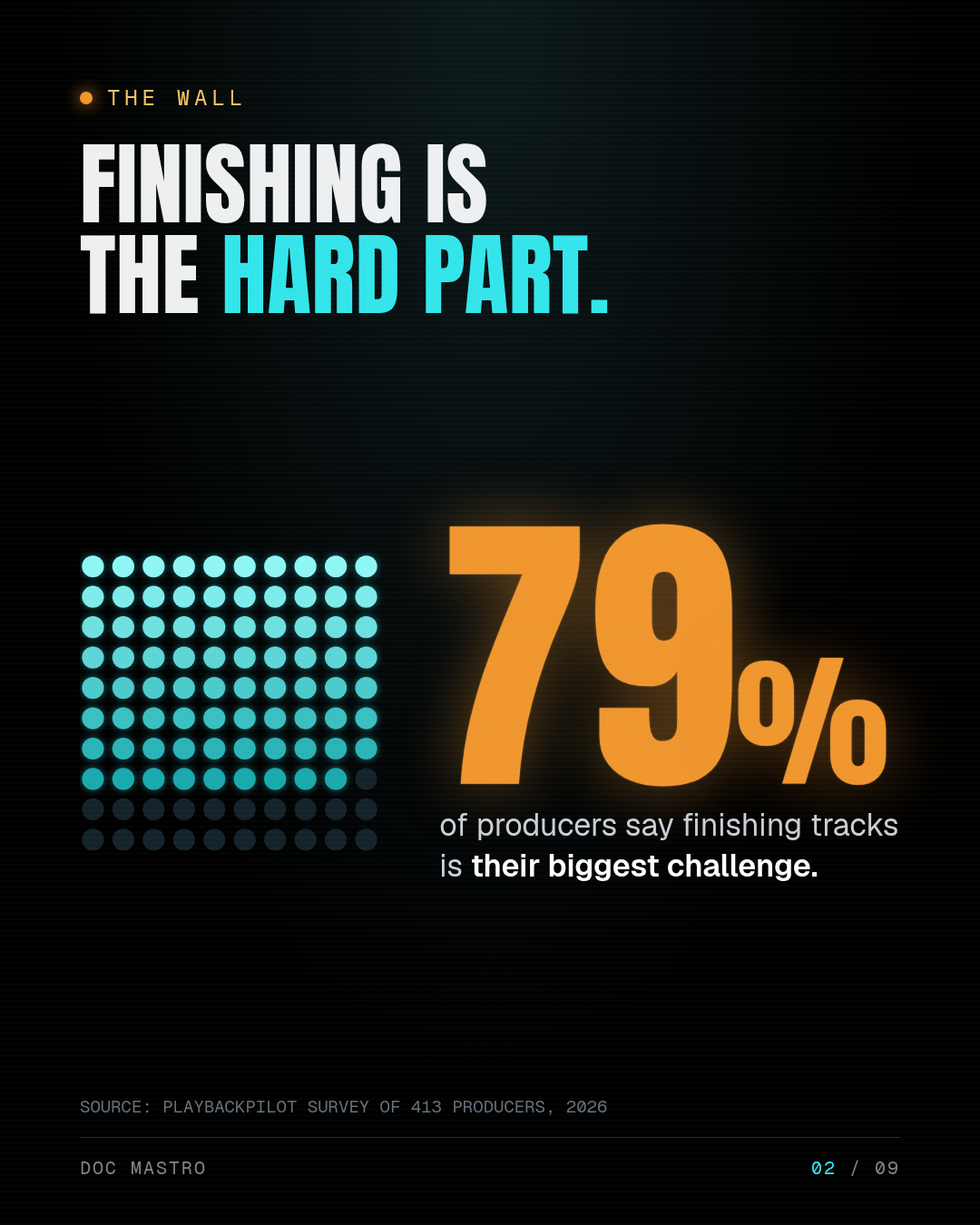
Every home studio has a graveyard of songs that are almost finished. You are in good company. PlaybackPilot surveyed 413 music producers, and 79% named finishing tracks as their biggest challenge, ahead of organization at 60% and inspiration at 48%.
Writing the song is the fun part. Finishing it to a professional standard is a different job. It takes a treated room, trained ears and years of audio engineering. Most people have a laptop and headphones.
Is my room lying to me about the bass?
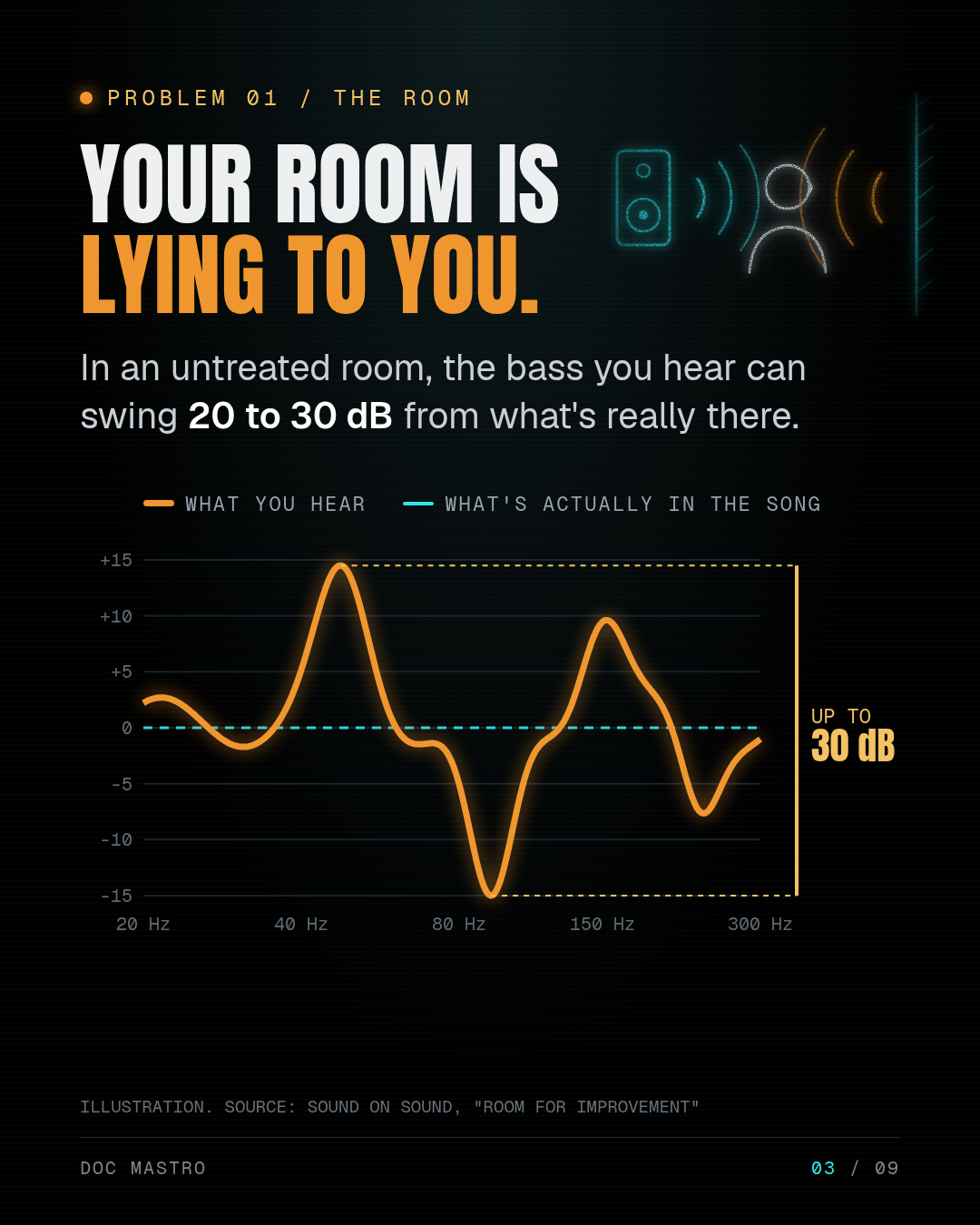
Probably. Sound On Sound reports that speakers in a bad room can show peaks and dips in the low bass as high as 20 or 30 dB. Those come from room modes, the standing waves set up between your walls. Move your chair and the bass changes. You end up mixing the room, not the song.
Headphones skip the room but add their own coloring, so they can't settle the question either.
Why does my mix sound worse the next day?
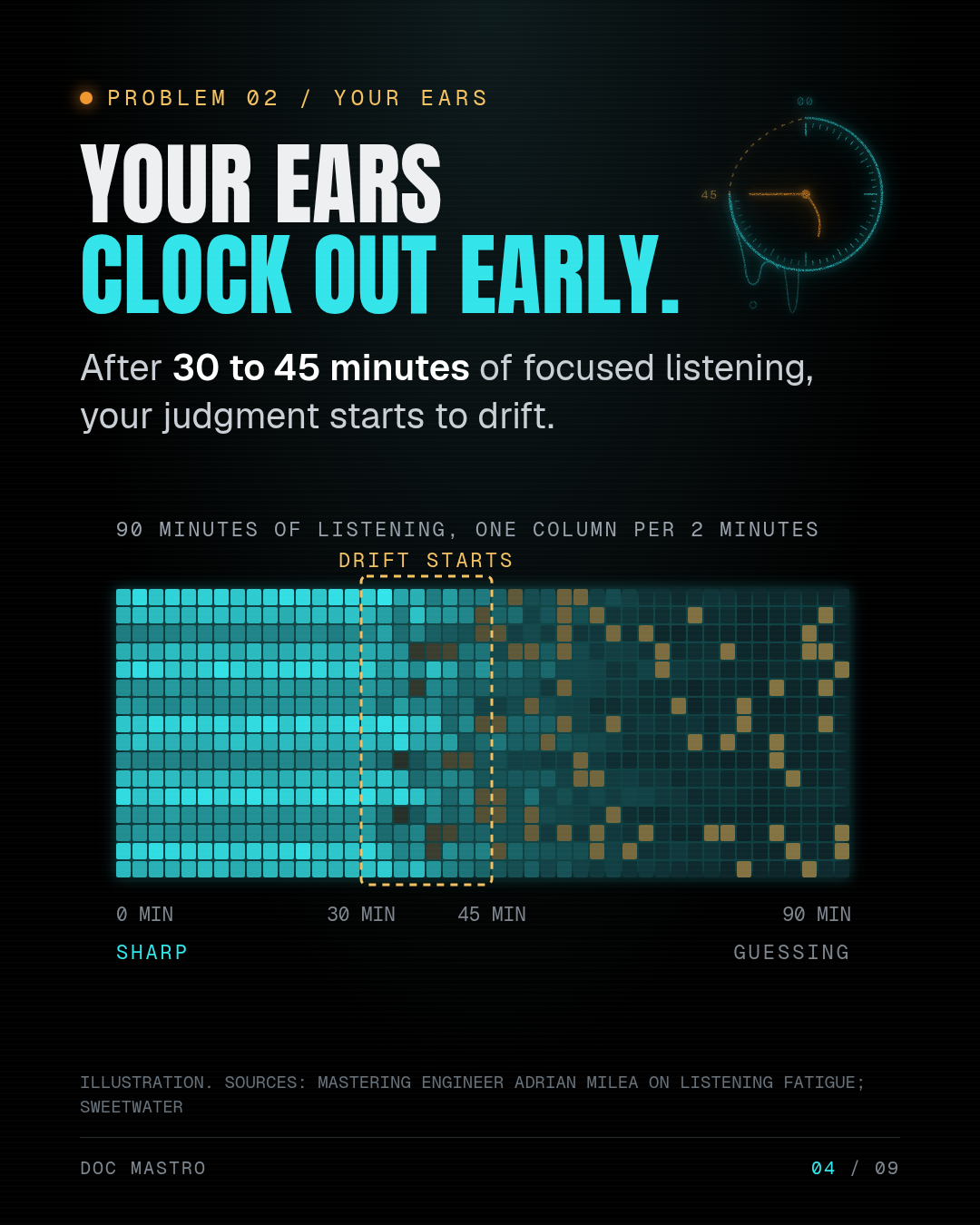
Your ears clocked out. Mastering engineer Adrian Milea writes that after about 30 to 45 minutes of focused listening, your perception starts to shift. He takes at least 15 minutes off for every 30 to 45 minutes of work.
Volume plays tricks too. The Fletcher-Munson equal-loudness curves show that at low levels you lose bass and highs, and at high levels everything sounds full. A late session stacks both.
Why does my song sound huge in headphones and thin in the car?
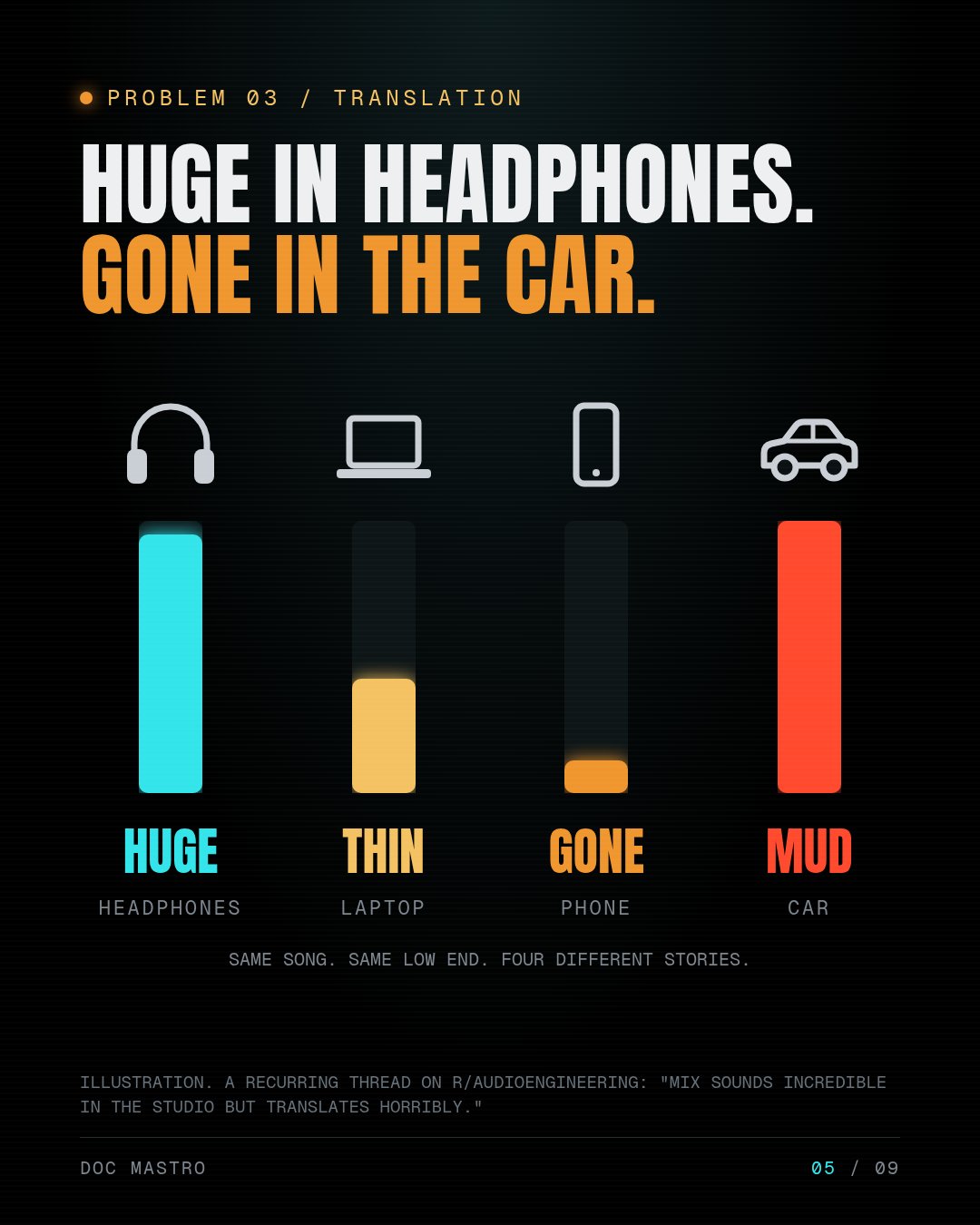
That is translation. A finished song has to hold up on headphones, laptop speakers, a phone and a car, and each one tells a different story about the same low end. Milea's advice is to check on all of them before you call it done. Most home setups give you one trustworthy picture, at best.
Does a louder master still win on streaming?
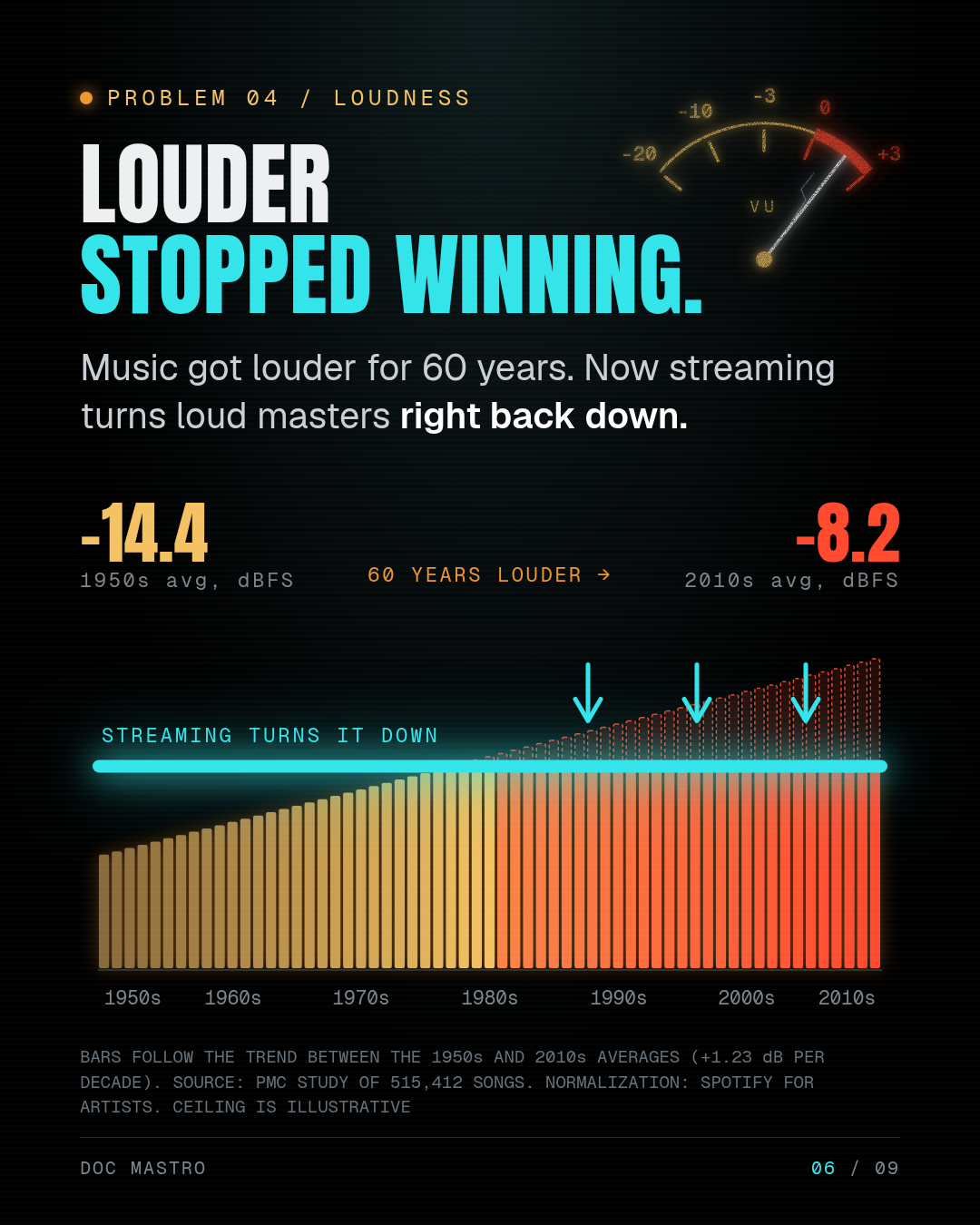
Not anymore. A study of 515,412 songs found average loudness rose from -14.4 dBFS in the 1950s to -8.2 dBFS in the 2010s. That race is over.
Spotify now adjusts tracks to -14 dB LUFS at playback. Loud masters get turned down. Soft ones only come up as far as their peaks allow, and Spotify recommends keeping true peak below -1 dB. Squash a master and you lose punch without gaining volume. More in why is my Suno song so quiet.
What does a real fix have to do?
Cover all four rows, on every song.
| Problem | What goes wrong at home | What a real fix must do |
|---|---|---|
| The room | Room modes push low bass up or down by as much as 20 or 30 dB. | Judge the song by measurement, not by the room. |
| Your ears | Perception starts to shift after about 30 to 45 minutes. | Hear hour three the way you heard minute one. |
| Translation | Huge in headphones, thin on a laptop, gone on a phone. | Hold up on every system, not just yours. |
| Loudness | Streaming turns loud masters down and only lifts soft ones to their peak limit. | Master for normalized playback with true peak headroom. |
A loudness preset covers one row. The other three are judgment calls, and judgment is exactly what a home setup keeps getting wrong. See how the options compare in AI mastering agents vs online services.
Can AI master a song at home?
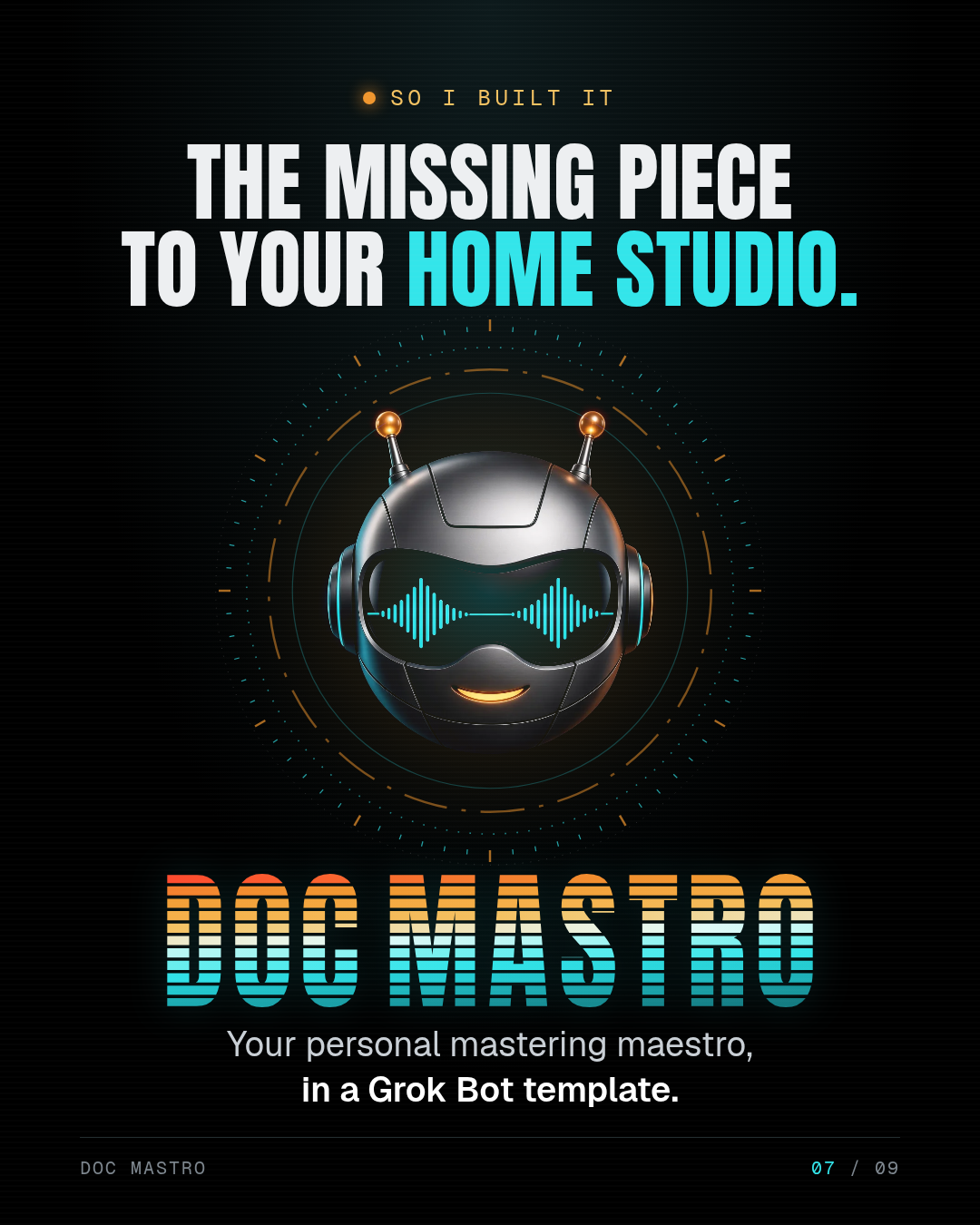
Yes, if it covers all four rows. So I built Doc Mastro: the audio engineer of your dreams, in a Grok Bot template. It is a Grok Bot audio engineer for Suno mastering and mixing, and it costs $19.
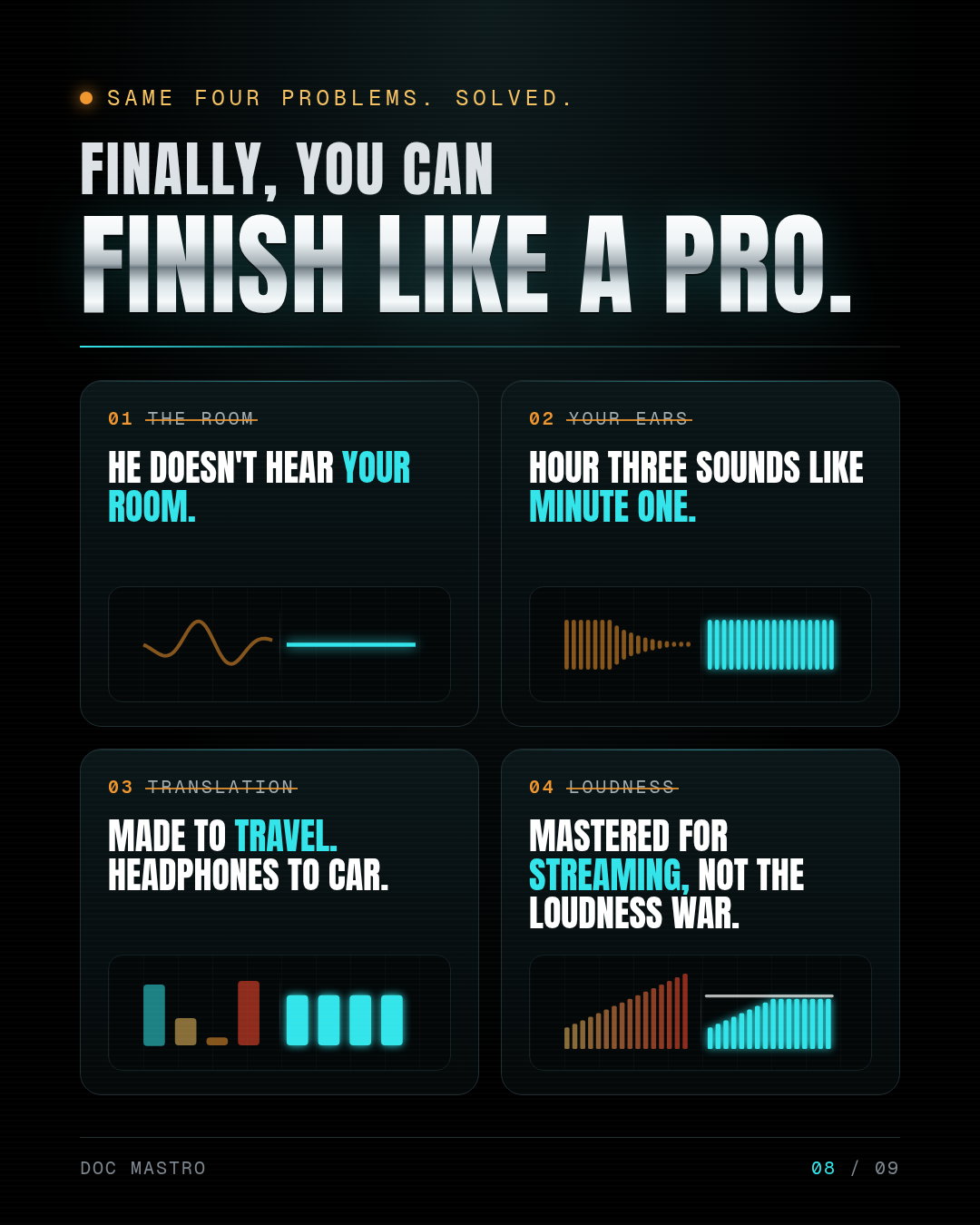
- The room. Doc doesn't hear your room. It measures loudness, true peak, stereo balance and spectrum, and backs every call with a number.
- Your ears. Hour three sounds like minute one. Doc doesn't get tired.
- Translation. Made to travel, with your MP3 and AAC copies checked after encoding.
- Loudness. Mastered for streaming, not the loudness war, then a release checklist before you distribute.
You still make the final call by ear. Doc just makes sure your ears are hearing the truth.
See everything it does on the Doc Mastro page. Rather do it by hand? How to master a Suno song walks through the steps.
Keep reading: fix a muddy Suno mix, the Suno release checklist and why your Suno song is quiet.
Finishing songs at home: questions
Why don't my songs sound finished?
Usually the room, tired ears, translation across speakers and loudness normalization hide problems a home setup can't hear. A real fix has to handle all four.
Can you master a song at home without a treated room?
Yes, if you judge by measurement instead of the room and check how the song holds up on other systems. Sound On Sound notes a bad room can push low bass up or down by 20 or 30 dB.
How long can I listen before my ears get tired?
Mastering engineer Adrian Milea says perception starts to shift after about 30 to 45 minutes of focused listening. He takes at least 15 minutes off for each block.
Should I make my master as loud as possible for Spotify?
No. Spotify adjusts tracks to -14 dB LUFS at playback, so loud masters get turned down. Spotify recommends keeping true peak below -1 dB.
Can AI master a Suno song?
Yes. Doc Mastro, a Grok Bot audio engineer, measures loudness, true peak, stereo balance and spectrum, builds a measured master as a new numbered file, and costs $19. You make the final call by ear.